
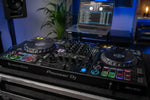
DJ Controllers and Pioneer DJ Controllers: A Practical Guide for Modern DJs
, by Graig Upton, 10 min reading time
, by Graig Upton, 10 min reading time
A DJ controller has become the central tool for most DJs working in clubs, mobile setups, and home studios. It combines the functions of traditional decks and mixers into a single unit, giving direct control over digital music software. Among the most recognised names in this space, Pioneer DJ has shaped how many DJs approach performance, particularly through its range of professional DJ controllers.
For anyone buying through DJKIT®, understanding what separates a standard DJ controller from a Pioneer DJ controller helps ensure the right choice is made first time.
A DJ controller is a hardware interface designed to control DJ software on a laptop or desktop. Instead of using a mouse or keyboard, the DJ interacts with jog wheels, faders, performance pads, and knobs to mix tracks in real time.
Most DJ controllers include:
· Two or more decks for playback control
· A mixer section for blending audio sources
· Pitch control for tempo adjustment
· Performance pads for cues, loops, and samples
· USB connection to DJ software such as rekordbox or Serato DJ
The goal is simple: give tactile control over digital music so mixing feels natural and responsive.
When DJs refer to a “Pioneer DJ controller”, they are usually talking about equipment designed around club standards. Pioneer DJ has built a reputation based on reliability, layout consistency, and software integration.
The key reason Pioneer DJ controllers are widely used is familiarity. A DJ who learns on Pioneer hardware can walk into most clubs and immediately understand the setup, as the layout tends to follow industry norms.
Another major factor is rekordbox integration. Many Pioneer DJ controllers are designed specifically to work with rekordbox, allowing DJs to prepare music libraries, set cue points, and export playlists directly to USB or performance mode.
Not all DJ controllers are the same, and not all DJs need the same level of equipment.
A general DJ controller from any brand will typically focus on affordability and accessibility. These are ideal for beginners or DJs who want a portable setup for practice or small events.
A Pioneer DJ controller, on the other hand, is often aimed at DJs who want to progress into club environments or professional touring. The differences are not just branding, but workflow and long-term compatibility.
Key distinctions include:
1. Workflow consistency
Pioneer DJ controllers tend to follow a standardised layout. This reduces confusion when moving between different models or club setups.
2. Build quality and durability
Higher-end Pioneer DJ controllers are designed for heavy use, including travel and frequent performance schedules.
3. Software ecosystem
Integration with rekordbox is a major advantage, especially for DJs who prefer exporting music to USB for standalone play.
4. Club compatibility
Many venues use Pioneer CDJs and mixers. Using a Pioneer DJ controller helps build muscle memory that transfers directly to club gear.
Selecting a DJ controller should be based on experience level, budget, and intended use.
For those starting out, the priority is learning core mixing skills. A compact DJ controller with basic features is usually enough. The focus should be on:
· Beatmatching
· Transitioning between tracks
· Using EQ properly
· Understanding phrasing
At this stage, it is not essential to invest in top-tier equipment. However, choosing a controller with a familiar layout can make progression easier later.
At this level, DJs usually start performing at small events or streaming sets online. A Pioneer DJ controller often becomes more relevant here due to improved build quality and deeper software features.
Important features at this stage include:
· Performance pads for creative mixing
· Multiple effects controls
· Better jog wheel responsiveness
· Strong integration with DJ software
For professional use, reliability becomes critical. Pioneer DJ controllers are commonly chosen due to their durability and consistency in live environments.
At this level, DJs often look for:
· Club-standard layout
· Advanced FX control
· Multi-deck capability
· High-quality audio interfaces
· Seamless rekordbox performance mode
A DJ controller is not just a playback device. It shapes how sets are performed.
Smaller controllers encourage tight, quick mixing with limited space for complex routines. Larger Pioneer DJ controllers allow for more expressive performance techniques such as:
· Loop layering
· Hot cue juggling
· Live remixing
· Advanced FX transitions
This is where equipment choice becomes more than technical specification. It directly influences how creative a DJ can be during a set.
Many DJs rush into purchasing without considering long-term use. The most common issues include:
· Choosing based on price alone rather than workflow
· Ignoring software compatibility
· Selecting a layout that does not match club standards
· Underestimating the importance of build quality
A DJ controller should be seen as an investment in skill development, not just a piece of hardware.
A DJ controller is the foundation of modern DJ performance, and choosing the right one has a direct impact on progression and confidence behind the decks. While there are many brands available, Pioneer DJ controllers remain a dominant force due to their consistency, reliability, and close alignment with club environments.
For DJs exploring their options, browsing through DJKit provides access to a wide range of DJ controllers suitable for every level, from first-time setups through to professional-grade systems.
The right choice depends on where the DJ is now, and where they intend to perform next.