
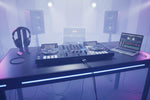
Is the AlphaTheta XDJ-AZ the End of the CDJ + Mixer Setup? We Think So.
, by Graig Upton, 5 min reading time
, by Graig Upton, 5 min reading time
For over two decades, the gold standard DJ booth setup has been set in stone: two CDJs and a mixer. It's the rig you'll find in Fabric, Berghain, Fabric, the blueprint for every serious club installation and touring rider. But something has changed. A new machine has landed that genuinely, for the first time, makes us question whether the traditional three-box setup is still necessary. That machine is the AlphaTheta XDJ-AZ.
Let's be clear from the outset, we're not talking about gear for bedroom beginners here. The XDJ-AZ is a serious, professional piece of kit, priced to match. But whether you're a working DJ looking to simplify your touring setup, a venue owner speccing a new installation, or an experienced DJ building your dream home studio, this system deserves your full attention.
The Pioneer CDJ-1000 changed everything when it arrived in 2001. Suddenly DJs had a standalone digital media player that felt and responded like a vinyl turntable. Pair two of those with a DJM mixer and you had a setup that was flexible, reliable, and, crucially, familiar to anyone who picked it up.
As the technology evolved through the CDJ-2000, 2000NXS, 2000NXS2, and ultimately the CDJ-3000, the three-box philosophy remained untouched. Separating the players from the mixer gave venues and DJs modularity: you could swap a faulty unit mid-set, upgrade components independently, and maintain the identical layout in clubs worldwide.
The downside? Three units, three power cables, multiple audio cables, and a significant footprint on the rider and in the flight case. For touring DJs, it means weight, cost, and complexity.
All-in-one DJ systems aren't new. Pioneer (now AlphaTheta) has been making them for years, the XDJ-RX series, the XDJ-XZ, and they found a strong market among mobile DJs, home users, and smaller venues. But they always came with compromises that kept serious professionals on the three-box setup:
Only two channels available for standalone playback. Smaller jog wheels that didn't feel like CDJs. A mixer section that wasn't quite DJM-quality. Limited FX and performance features. No cloud connectivity. These weren't deal-breakers for weekend warriors, but they were enough to keep the XDJ-RX firmly in a different category to the touring professional's kit.
This is where it gets genuinely exciting. AlphaTheta have built the XDJ-AZ from the ground up to close every one of those gaps. Here's what makes it different:
The XDJ-AZ isn't a one-size-fits-all purchase, but its potential audience is broader than you might think:
The touring DJ. One flight case instead of three. One unit to check in. One power cable. For a DJ doing 50+ dates a year, the logistics case alone is compelling, and with CDJ-3000 DNA under the hood, there's no performance compromise.
The venue owner. Speccing a new booth? A pair of CDJ-3000s plus a DJM-A9 will cost significantly more than a single XDJ-AZ, and you'll need to manage three separate units for support and maintenance. The AZ simplifies installation and reduces long-term ownership complexity.
The serious home DJ. If you want the real experience, proper jog wheels, professional mixer, four decks, without occupying half your living room with a three-piece rig, the XDJ-AZ delivers the whole thing in a single footprint.
The DJ who wants future-proof connectivity. CloudDirectPlay and SonicLink aren't just gimmicks, they represent where DJ technology is heading. Getting in early on that ecosystem has real long-term value.
We'd be doing you a disservice if we didn't acknowledge where the traditional setup still has an edge. Good gear advice requires honesty:
These are real considerations. But for the majority of DJs, they're outweighed by what the XDJ-AZ brings to the table.
The AlphaTheta XDJ-AZ is, quite simply, the most convincing argument yet that the traditional CDJ + mixer setup is no longer the only professional option. It doesn't cut corners, it doesn't ask you to sacrifice performance for convenience, and it arrives with connectivity features that make older systems look dated.
For touring DJs, venue owners, and serious home enthusiasts, this is the system that genuinely changes the conversation. Not a stepping stone, a destination.