
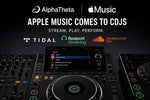
AlphaTheta Brings Apple Music to CDJs – A Huge Change for Modern DJs
, by Graig Upton, 9 min reading time
, by Graig Upton, 9 min reading time
For years, DJs who relied on streaming services faced one major limitation: club-standard gear rarely supported the platforms they actually used every day. That gap has started to close in a big way after AlphaTheta announced Apple Music support for its flagship CDJ range.
It might sound like a simple software update on the surface, but the impact on the DJ industry could be massive.
Traditionally, DJs using professional club DJ equipment needed to buy and download music files before performing. Even as streaming became common in everyday listening, most club setups still depended heavily on locally stored tracks and USB exports.
With Apple Music integration, DJs can now access enormous streaming libraries directly through compatible AlphaTheta systems. That means millions of tracks become instantly available without needing to purchase every individual file beforehand.
And Apple Music is no longer the only major platform available on modern DJ systems. DJs can also use:
· TIDAL, including convenient single sign-on support via NFC or QR code
· Beatport Streaming, which fully caches loaded tracks directly onto the deck to help prevent issues caused by internet drops
· SoundCloud Go+ for accessing edits, bootlegs, remixes, and unofficial versions often unavailable on traditional download stores
For DJs who regularly take requests, play open-format sets, or perform at weddings and private events, this could completely change how they prepare for gigs.
The CDJ has long been viewed as the industry standard in clubs across the UK and around the world. Because of that, any major feature added to the platform tends to influence the wider DJ scene very quickly.
Streaming support has already become common on some standalone DJ systems, but seeing Apple Music move onto flagship CDJ hardware feels different. It signals that streaming is no longer being treated as a secondary option. Instead, it is becoming part of mainstream professional DJ workflows.
That is a significant moment for newer DJs who have grown up listening through streaming services rather than building large downloaded music collections.
DJs can search and load tracks from enormous catalogues without carrying multiple USB drives or external hard drives.
This is especially useful for:
· Mobile DJs
· Bar and lounge DJs
· Wedding DJs
· Multi-genre performers
· Livestream DJs
If the crowd suddenly changes direction musically, having instant access to more tracks can help keep the energy flowing.
Streaming integration also makes discovering new music much simpler. DJs can test tracks in live environments before deciding whether to permanently purchase them for offline use.
Platforms like SoundCloud Go+ are particularly useful here, giving DJs access to exclusive edits, remixes, mashups, and bootlegs that may never appear on download stores or mainstream streaming services.
That flexibility helps DJs stay current with trends much faster than traditional downloading alone.
Apple Music playlists, Beatport charts, and streaming libraries can help DJs organise sets more efficiently. Curated playlists, charts, and personal libraries become easier to work from when planning performances.
For newer DJs especially, it lowers the barrier to entry into professional-level equipment.
Despite the excitement, not everyone is fully convinced.
Many professional DJs still prefer owning music outright rather than depending on streaming access. Internet reliability remains a concern in clubs and venues where Wi-Fi can be inconsistent.
However, modern streaming integrations are already addressing some of those worries. Beatport Streaming, for example, fully caches loaded tracks directly onto the deck, helping protect against temporary internet interruptions during playback. TIDAL has also streamlined login access with NFC and QR code authentication, making setup much faster in live environments.
There are still concerns around:
· Tracks disappearing from streaming platforms
· Licensing changes
· Audio quality consistency
· Last-minute connection issues
· The inability to directly record streamed DJ sets due to licensing restrictions
That final point is especially important for DJs who create mixes for social media, radio shows, or client playback after events.
One solution is using external recording hardware such as the EvermixBox5, which allows DJs to easily record and share live sets directly from their mixer setup. For stream-heavy DJs, it can be a useful addition to a modern workflow.
Because of this, many experienced DJs are still likely to continue carrying downloaded backup libraries even while using streaming features.
The move from Apple and AlphaTheta reflects a wider shift happening throughout DJ technology.
Modern DJ gear is increasingly focused on:
The days of carrying massive folders of MP3s everywhere may not disappear entirely, but the industry is clearly evolving towards more connected and flexible setups.
For DJs entering the scene today, streaming-ready club equipment could soon feel completely normal.
Apple Music support on AlphaTheta’s flagship CDJs is more than just another feature update. It represents a major step towards a future where streaming and professional DJing work side by side.
The addition of platforms like TIDAL, Beatport Streaming, and SoundCloud Go+ also shows that DJ streaming is becoming far more mature and reliable than many DJs may realise.
Some performers will still prefer the security and control of owned music libraries, and that approach is unlikely to disappear any time soon. However, for DJs who value flexibility, discovery, and instant access to music, modern streaming workflows are becoming increasingly difficult to ignore.
As clubs, bars, and events continue embracing digital workflows, streaming integration may soon become an expected feature rather than an exciting bonus.